
Turning Care into a System: CEO Dr. Esther Castillo on building sustainable, dignified care models.
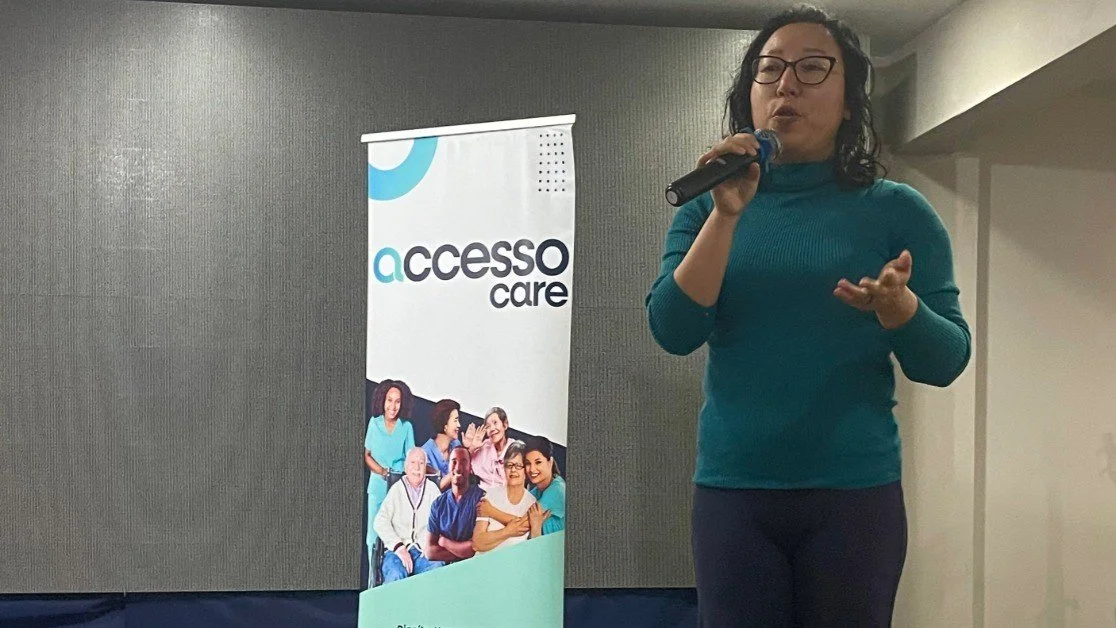
Dr. Esther Castillo, CEO of Accesso Care
“Turning Care into a System”: An Interview with Accesso Care's CEO Dr. Esther Castillo
From the college classroom to city government and now a care organization, Dr. Esther Castillo has kept the same north star: measure a society not by how it celebrates its most successful, but by how it treats its most vulnerable. This interview traces her path, values, and the systems-thinking she brings to caregiving.
From Academia to Action
“I was a sociology professor for about a decade,” she recalls. After her daughter was born, she stepped out of academia to seek impact beyond the classroom—first as a Census volunteer training within the Chinese community, then leading a Chinatown nonprofit’s mental-health program. When early vaccine rollout bypassed elders with limited English proficiency, her team partnered with FEMA and built a weekly clinic in the community center: over two years they administered more than 6,000 shots, over 90% to limited-English speakers.
Inside City Hall
Recruited by Philadelphia’s Office of Community Empowerment & Opportunity, she served as Director of Racial Equity, collaborating with communications to reframe poverty narratives and coordinating DEI efforts across departments. She left after about 18 months amid a mayoral transition.
Joining—Then Leading—Accesso Care
Accesso Care was founded by her husband, Jimmy Zhang; she joined later and, drawing on years of immigrant-community work, quickly connected with community leaders and broadened the pipeline of students from diverse backgrounds. Today, she leads the organization.
The Values She Won’t Compromise
Accesso Care’s three core values—community, honesty, dignity—mirror her own. Personally, she adds a fourth: justice. “I’m drawn to work where I can advance social justice,” she says, noting the courses she taught on class, race, gender, and inequality.
A Relational Approach to Leadership
As a first-generation college graduate and a woman of color in academia, she mentored many first-gen and international students—work she loved, but which eventually led to burnout. That experience, coupled with becoming a mother, pushed her toward mental-health work and, later, to building a culture where caregivers themselves are cared for.
Systems, Not One-Off Tasks
Her mantra from the Chinatown program still guides her: “Community is where wellness begins.” Many well-being challenges are not personal failures, she argues, but societal failures and a lack of community support. In a city she describes as the poorest large U.S. city, she wants Accesso Care to be a “cushion”—a place where people can lean on one another while navigating hard lives. Dignity, she adds, requires real support, not slogans.
Why Intergenerational Connection Matters
Though not a licensed elder caregiver, she’s spent years sitting with older adults—grandparents, community elders, even an American host mom who lacked an emergency contact—listening to their stories. She believes a healthy community needs far more intergenerational support, and that a society should be judged by how it treats its most vulnerable—elders very much included.
Looking Ahead
Expect her to keep weaving those threads: building pipelines from immigrant communities, strengthening mutual support among caregivers, and designing services where community, honesty, dignity, and justice are embedded into training, placement, and follow-up—not just posted on a wall.
